
2026-10-17 ·
Roof Ventilation and Commercial Flat-Roof Maintenance in Davenport, IA
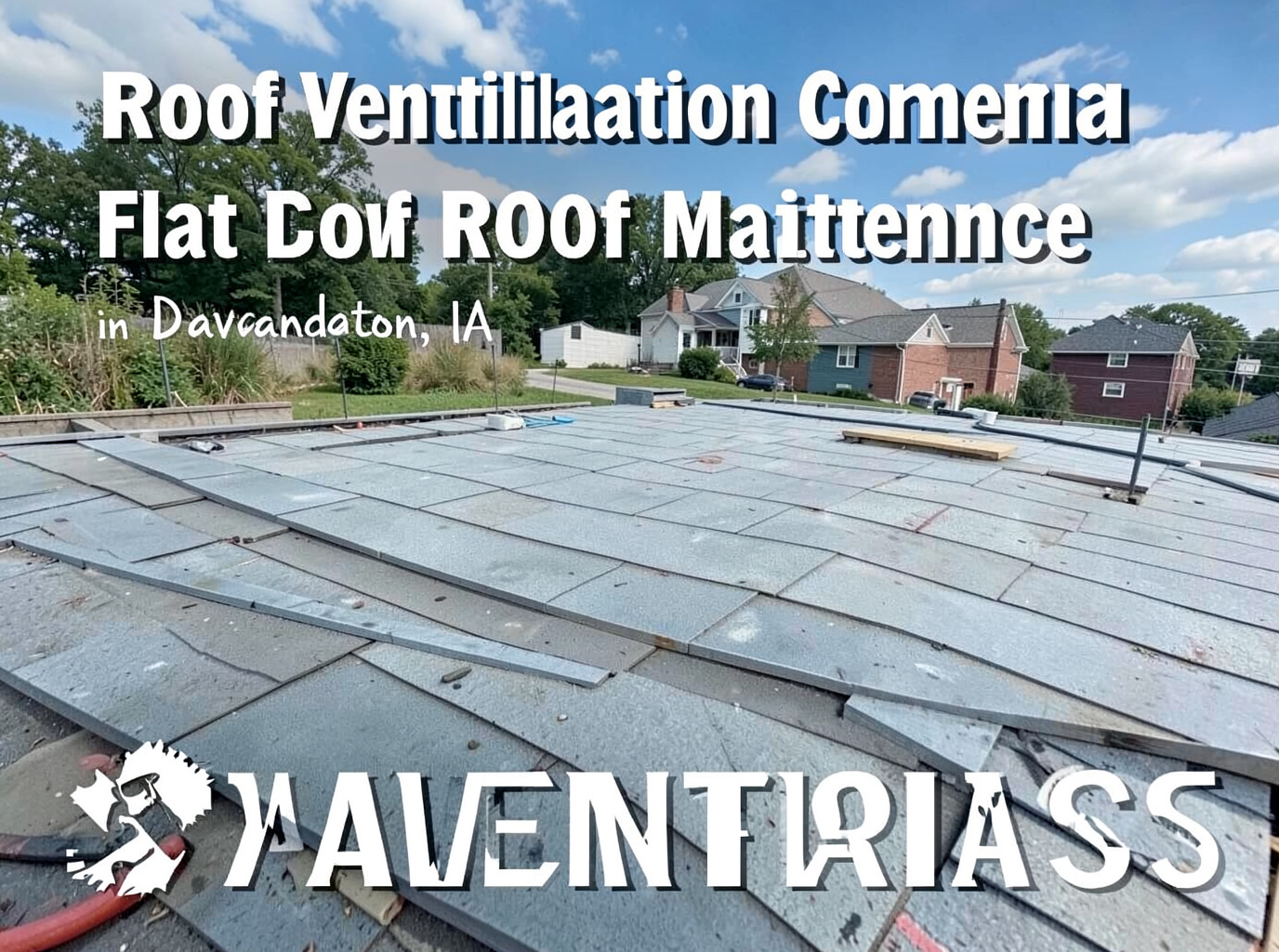
In Davenport's humid continental climate, roof ventilation systems that move 1 cubic foot of air per square foot of attic floor space combined with commercial flat-roof maintenance performed every six months prevent ice dams in winter and ponding water after summer storms across Downtown, East Village, and West End neighborhoods.
Roof Ventilation Needs in Scott County's Climate
Davenport experiences hot summers that drive attic temperatures above 130 degrees and cold winters where temperatures drop below freezing for weeks. These swings create condensation inside attics when warm air meets cold roof decks. Proper ventilation with ridge vents and soffit intakes keeps airflow moving year-round. In older housing stock built before 1970 in the West End and Northwest areas, many homes lack adequate intake vents, leading to trapped moisture that rots sheathing. Adding balanced ventilation cuts energy costs by allowing insulation to perform as rated and reduces the chance of mold growth that homeowners later discover during spring inspections. Local crews see the same pattern repeat in Bettendorf and Moline homes where river humidity adds extra load on ventilation systems.
Commercial Flat-Roof Maintenance Steps for Davenport Buildings
Commercial flat roofs in Scott County face constant exposure to UV, standing water after heavy rains, and freeze-thaw cycles that crack seams. Begin each spring by clearing debris from drains and scuppers around properties near the Figge Art Museum and River Music Experience. Check membrane seams and flashings at HVAC curbs every six months, paying special attention to areas where previous repairs used incompatible materials. Apply reflective coatings on EPDM or TPO surfaces before summer heat arrives to lower surface temperatures by 20 to 30 degrees. Document every inspection with dated photos so building owners can track changes over multiple seasons. These routines catch small blisters before they become leaks that affect tenant spaces below.
Seasonal Challenges in Downtown and East Village
Winter brings ice dams along eaves in Downtown Davenport when heat escapes through poorly ventilated attics and melts snow that refreezes at the gutter line. Summer brings intense UV and occasional hail that pits modified bitumen surfaces on flat roofs near Vander Veer Botanical Park. Crews working in the East Village often find that buildings from the early 1900s have parapet walls that trap heat and accelerate membrane aging. Addressing ventilation first in these structures lowers the interior temperature load that drives ice dam formation later. Regular seam checks after wind events help owners avoid emergency calls when water enters through lifted flashings.
Connecting Ventilation and Flat-Roof Care
Many commercial buildings in Davenport combine sloped sections with flat sections, so ventilation on the sloped areas directly affects how quickly moisture dries on the flat membrane below. Poor attic airflow pushes humid air toward the flat-roof transition, speeding seam failure. Scheduling ventilation upgrades alongside flat-roof coating work lets crews address both issues in one mobilization. This approach proves especially useful for properties near Modern Woodmen Park where wind off the river accelerates wear on both roof types.
Practical Next Steps for Property Owners
Schedule a ventilation assessment before the next heating season to measure existing airflow and identify blocked soffits. Pair that visit with a flat-roof inspection that includes core samples on built-up roofs older than 15 years. Owners in North Davenport and South Davenport can review related guidance on seasonal roof risks through the ice dams article for additional winter preparation steps. When repairs are needed, roof ventilation installation and commercial flat roof repair services address the specific climate demands of Scott County without generic national recommendations.